
Why Do I Feel Tired All The Time Even After Sleeping?


"I'm tired because I didn't get enough sleep."
For most of us, that's the answer, simple, isn’t it?You get seven or eight hours, fall asleep quickly most nights, yet still wake up feeling as if you never went to bed.
So you do what most people do: blame the mattress, buy blackout curtains, stop drinking coffee after 2 p.m., and download an app that tracks your sleep cycles. After a few weeks, the data shows you slept fine, but you may still feel drained by 11 a.m.
That's usually when people type “why am I always tired” into Google at midnight, half‑expecting a magic fix. There isn’t one, because the problem is misidentified. Sleep is only one factor; other things wear you down regardless of how many hours you clock.It turns out this isn’t unusual, nor is it just in your head. Researchers studying fatigue have discovered that sleep and tiredness don’t always align.
In a chronic‑fatigue study, only about 28 % of participants with high fatigue also had serious sleep disturbances. The remaining 72 % were tired for reasons unrelated to the previous night’s sleep. Sleep was doing its job; something else was draining them.
If you've been trying to improve your sleep but still feel tired, perhaps sleep was never the whole problem.
The Tiredness That Has Nothing To Do With Your Body
There’s a kind of exhaustion unrelated to physical effort. Even if you haven’t lifted anything heavy or run anywhere, by day’s end you feel as if you’ve been carrying a weight all day. That’s mental fatigue, caused by a brain that never gets a real break.

Consider how many decisions you make before 9 AM: what to wear, what to eat, which email to answer first, whether to accept a meeting, and how to reply to a message that has been unread since yesterday. Psychologist Roy Baumeister spent years studying this and found that willpower and decision-making draw from the same limited pool. The more choices you make early in the day, the fewer good ones you have left by evening, which is part of why judges have been found to rule more leniently right after a break and less leniently as the day wears on. Your brain isn't being lazy by 6 PM. It's been spending a resource all day that nobody told you was limited.
None of these decisions feel big on their own. Stacked together, all day, every day, they add up to a kind of tiredness that eight hours in bed doesn't touch, because sleep was never the thing being used up.
The Tiredness You Can’t Explain to Anyone
There's another kind that's harder to name, and even harder to say out loud without sounding dramatic. You're not sad exactly. You're not sick. You just feel like everything requires more effort than it should, and you don't know why.
This is often emotional exhaustion, and researchers who study burnout treat it as one of the clearest markers of it. The World Health Organization actually classifies burnout as an occupational phenomenon built on three things: emotional exhaustion, a growing sense of distance from your work, and feeling less capable at things you used to do easily. That first one, emotional exhaustion, is usually the first sign people notice and the last one they name correctly. Most people call it "being tired" for months before they call it what it is.
It tends to show up quietly. Maybe you've been avoiding a difficult conversation you haven't had yet. Maybe you've been managing everyone else's mood at work or at home without anyone managing yours. You don't notice it as tiring because none of it looks like effort from the outside. However, your mind has been working overtime, and nobody, including you, has given it a name.
What Burnout Actually Feels Like
People imagine burnout as some dramatic collapse. The numbers say otherwise. Recent workplace research puts the share of employees who say they've felt burned out at some point in the last year, and a large chunk of them describe it as a regular, ongoing state rather than a one-off bad month. Women report it more often than men. People in their twenties and thirties report it more than people in their fifties.
None of this is rare. It's closer to the average experience of working life right now than the exception.
What it looks like day to day is smaller and more boring than people expect. It's reading the same sentence three times and still not knowing what it said. It's losing interest in things you used to enjoy without noticing exactly when that happened. It's a short fuse over small things and low motivation over everything else.
The common burnout symptoms rarely arrive as one big event. They build slowly, from too much output over too long a stretch, with not enough real rest in between.
Where Sleep Quality Actually Fits In
None of this means sleep doesn't matter. It does, just not in the way most people assume.
Multiple studies on fatigue show that sleep quality predicts tiredness far better than sleep duration. In a study of healthy adults, controlling for mood, workload, and lifestyle, sleep quality was linked specifically to mental fatigue, and not physical tiredness. In another study of people with insomnia, fatigue was better predicted by how rested participants felt subjectively than by any objective sleep‑lab measures such as sleep onset latency or number of awakenings.
Another way to look at it is, a person who sleeps eight hours with a racing mind wakes up more tired than someone who slept six hours with a quiet one. If you're lying in bed replaying the day or planning tomorrow, your body might be resting, but your mind isn't. That's often the honest answer to why I feel tired after sleeping. You slept, yet you just didn't rest.
Stress Doesn’t Always Appear As Stress

Most people picture stress as something loud: deadlines, arguments, a packed calendar.
Often it's quieter than that. It's the low hum of always being slightly behind, half‑thinking about something else, always on.
That kind of stress doesn't need a crisis to wear you down, only needs time, and most of us give it plenty, often without realising it's the thing driving the tiredness we keep blaming on sleep.
What Actually Helps
It’s not a longer to‑do list, and it’s definitely not another productivity hack.
What helps is giving your mind real breaks, beyond the breaks from work. Think of a walk with no podcast, a meal without your phone, or a day when you’re not solving anything for anyone, including yourself.
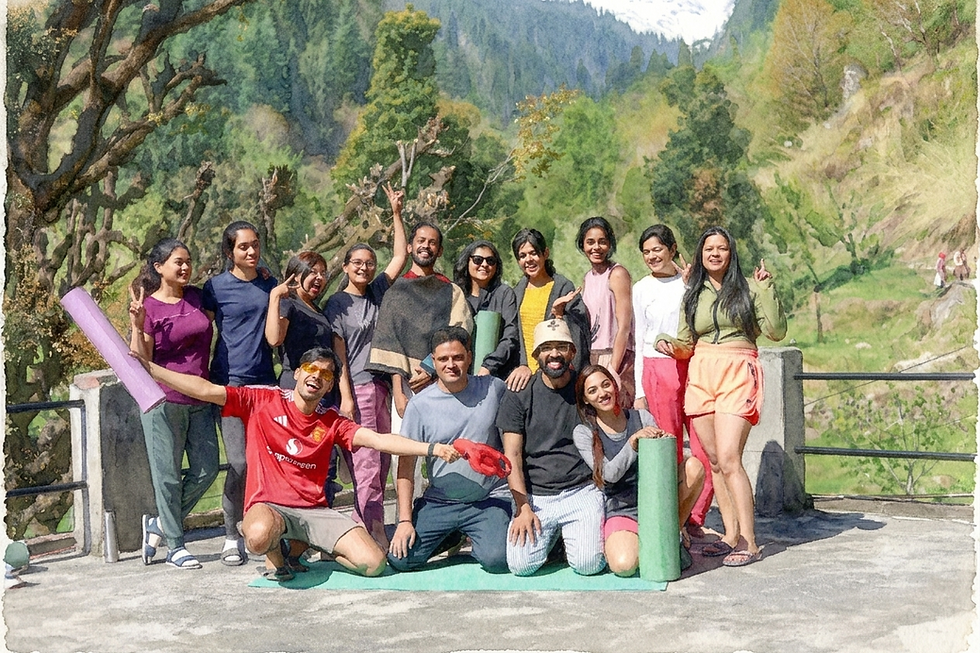
That’s why we built Swakaash the way we did. A Slowcation offers the slowness, intention, and mindfulness your mind hasn’t had in a long time, enough for you to notice what’s actually been tiring you out.
If you’ve been chasing better sleep but still feel tired all the time, maybe sleep was never the problem. Perhaps it’s everything you’ve been carrying that never gets to rest.


Comments